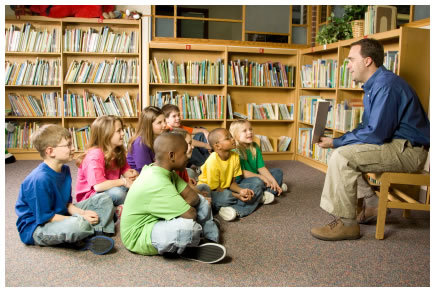
Greta Paterson, expert children's librarian, explain ypu how to choose proper book for your kid:
1- Enjoy: Choose books you think your child will enjoy,
or better still, let them choose themselves. Children who enjoy books
are far more likely to keep reading. Remember they don’t have to finish a
book if they discover they don’t like it and never make them read a
book just because you think they ought to. Reading should be fun.
2- Interests: Some children
will love scary stories, others prefer funny stories and many love to
follow a series or favourite author. Some children, particularly boys,
may prefer factual books. Children who struggle with reading may prefer
comic books or short stories. Babies and toddlers will love bright
colours, repetition of words or rhymes, or books that invite you to
touch, scrunch and prod!
3- Age: Babies and toddlers will love board books and picture books,
beginner readers like short stories with pictures and children around
the age of 7+ will be ready for short chapter books. Some books have age
guidelines on the back but remember that is just what they are,
guidelines. They may be too easy for good readers or too hard for
children who struggle. Either way it could put them off reading.
4- Ability: Are the words
used appropriate for your child’s reading ability? Many teachers advise
that if there are more than five hard words on a sample page in early
reading books, the book is too difficult. It’s not a good idea to push
your child to read books they are not ready for yet. That could put them
off reading for good.
5- Favorite authors and series: If
your child has a favourite author or is addicted to a series of books
then choosing is easy but what happens when they have read them all?
Your local children’s librarian or bookseller will be able to suggest
similar books or you can try some of the suggested websites below.
6-
Look at the book:Does
the cover make you want to pick it up? Does the blurb make you want to
read it? Is the print clear and well spaced on the page? Are the
pictures bright and colourful? Is the story easy to read aloud? Try
reading a page at random to see if you like the style. Try reading it
aloud if you are choosing a bedtime story.
7- Book reviews: Newspapers
and magazines sometimes have reviews of children’s books and there are
specialist children’s book magazines which are listed in the websites
below. Online booksellers like Amazon will have reviews and publishers’
websites are a good source for what’s new.
8- Book groups: Your
local library, school or bookseller may have a children’s book group
like Chatterbooks, where children can come together to talk about books
and try new things. There may be a local Children’s Book Group in your
area where you can meet people like authors, publishers and teachers who
are interested in children’s books. You can find out from the
Federation of Children’s Book Groups.
9- Recommendations: Talk to other parents, children and teachers or ask your local bookseller or librarian.
10- Libraries: It’s
great to own books and have lots of books around the house but it can
get expensive. If you join the library you can try out lots of different
books free of charge or attend a storytime session. There may be
displays or book lists to help you to choose and every year most
libraries run the Summer Reading Challenge, a fun promotion with lots of
rewards to keep children reading in the summer holidays
.